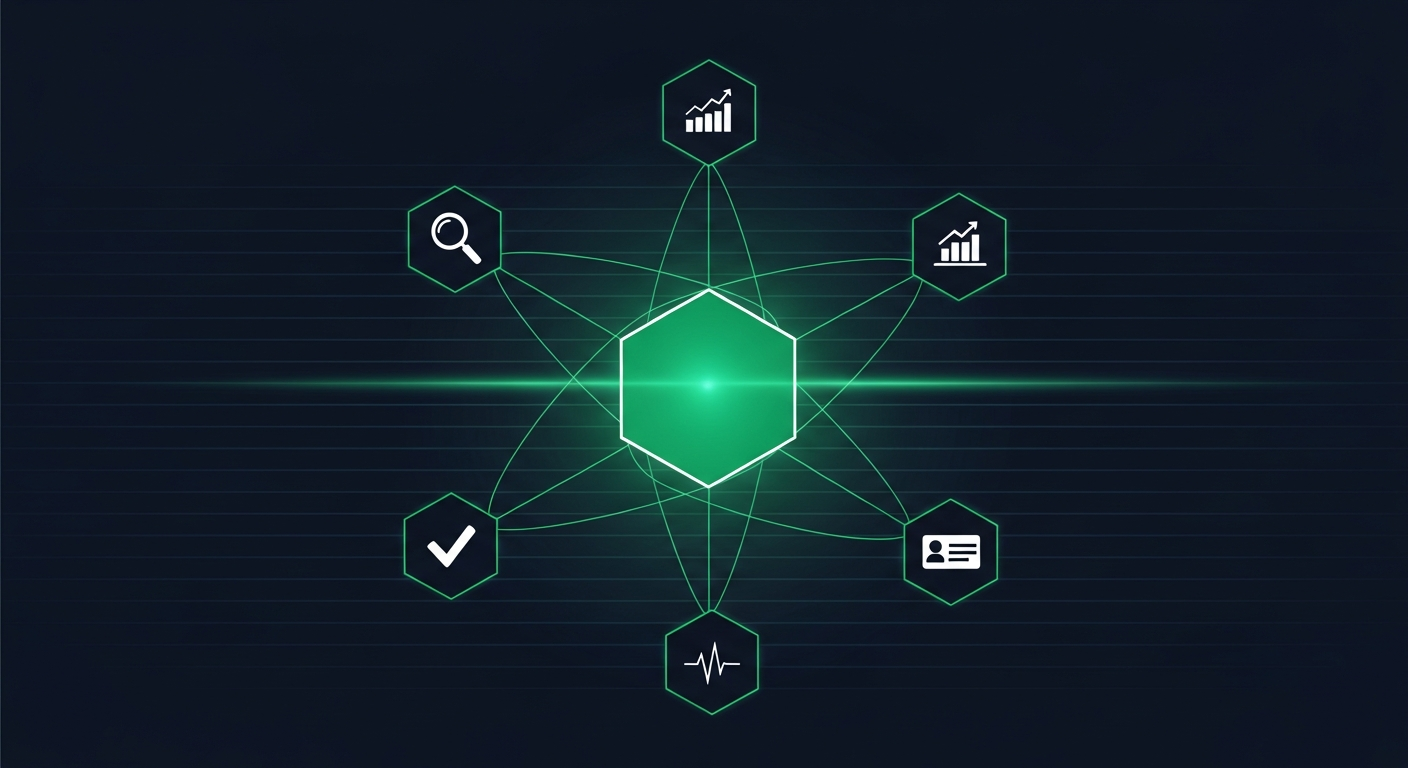
Direct Answer: B2B lead generation software is the system your revenue team uses to discover in-market accounts, verify the right contacts inside them, and surface the timing signals that justify a conversation. Strong tools combine fresh data, buying signals, and clean CRM sync; weak ones sell database size. Pick on workable dossiers per dollar, not feature counts.
B2B Lead Generation Software: The Short Answer
- Yes, if your reps spend more than a third of their week list-building or scrubbing bad records.
- Yes, if outbound bounces and cold-dial connect rates are sliding quarter over quarter.
- It depends, if you sell almost entirely inbound — enrichment plus a router may cover the gap.
- No, if you only need a one-off TAM list once a year. A flat database is cheaper.
Common Misconceptions About B2B Lead Generation Software
A few pricey assumptions show up in almost every evaluation:
- "Bigger database = better leads." A 200-million-record database with 18-month-old emails will damage your sender reputation faster than no data at all. Verification recency beats raw volume.
- "AI will write the emails, so the data quality matters less." The opposite. An LLM only amplifies whatever it's pointed at — wrong job title or stale company means a confidently wrong cold email at scale.
- "Lead gen software replaces our sequencer / CRM / ABM tool." Almost never. B2B lead generation software is the data and signals layer. Engagement, record-keeping, and orchestration usually stay in their existing systems and consume that data.
- "If it's expensive, it must be enterprise-grade." Price has very little to do with data freshness or signal quality. The honest unit is price per workable dossier, which most pricing pages refuse to publish.
What Good B2B Lead Generation Software Actually Does
A modern lead generation platform collapses four jobs that used to live in four different tabs:
- Discovery. Find accounts and contacts that match your ICP by firmographics, technographics, hiring patterns, or named-account lists — without forcing reps into a CSV-export workflow.
- Verification. Confirm the email and phone are valid for the person in the role today, not when the record was first scraped three years ago.
- Buying signals. Surface job changes, new hires, posted roles, funding rounds, technology changes, and earnings-call mentions tied to each account so reps know why now.
- Activation. Push a clean, deduped, field-mapped record into the CRM or sequencer so the rep can act without a copy-paste tax.
If a tool only does one of those four, it is a component, not a lead generation platform. That is fine — but you should know which gap it fills before you sign anything longer than a quarter.
The Capability Checklist for B2B Lead Generation Software
Walk through these five capability groups before a demo turns into a contract. A serious vendor can answer each one in a single sentence without checking with their solutions engineer.
Data sourcing & freshness
- Where does contact data originate (public web, partnerships, opt-in panels, contributor networks)?
- What is the median age of an email address in the database?
- How are records re-verified, on what cadence, and what evidence triggers a re-verification?
Buying signals
- Which signals are first-class — job change, new hire, posted role, funding, tech-stack change, earnings mention, topic intent — and which are merely passed through from a third party?
- What is the median signal-to-alert latency, end to end?
- Are signals deduped per account before they hit a rep's inbox or Slack channel?
Targeting & ICP fit
- Can the platform express your ICP as a saved filter, not a one-off search?
- Does it support exclusion lists (existing customers, open opportunities, do-not-contact)?
- Can two ICPs (e.g., expansion vs. new logo) live side by side without a manual data split?
CRM and sequencer sync
- Does the connector respect ownership rules and skip duplicates rather than overwrite human edits?
- Are sync errors surfaced where a RevOps owner can see them, not buried in a vendor admin panel?
- Can syncs be scoped (e.g., A-tier accounts only) instead of all-or-nothing?
Compliance & deliverability
- How does the vendor handle GDPR / UK GDPR data-subject requests — at the individual level, not just the account level?
- Does the platform separate "valid" from "catch-all" mailboxes before reps send?
- Is bounce rate documented for a clean run on this dataset, with a contractual SLA?
A platform that scores well on three groups and "we'll get back to you" on the other two is a platform you'll outgrow within a year. Score each group from 0–3 and add them up. Anything under 10 is a no-go.
Evaluation Framework: A Two-Week Test, Not a Two-Quarter Pilot
Most lead generation software loses on the same three artifacts. You do not need a six-month committee evaluation to surface them.
- The 25-record verification audit. Pull 25 representative contacts per shortlisted vendor. Verify the email and phone yourself — direct dial, manual reply check. Record the accuracy rate. This one number disqualifies most vendors before pricing matters.
- The sandbox CRM sync. Spin up a CRM sandbox, enable the vendor's connector, and load 100 records. Confirm dedupe behaviour, ownership respect, field-conflict resolution, and rollback. A broken sandbox sync is a broken pilot — the production version will be worse.
- Price per workable dossier. Take total annual spend (seats + data + add-ons) and divide by the number of dossiers a rep actually contacted during the trial. Compare against your current sourcing cost per qualified meeting. If the vendor's number isn't materially better, the spend is a status purchase.
- Signal latency check. Pick two signal types you care about (e.g., new hire into your buyer role, funding event). Compare the vendor's alert timestamp against the public record. Anything over 72 hours is too slow for outbound.
- Compliance interview. Ask each vendor — in writing — exactly how a contact requests removal and how long that propagates to your downstream tools. A vague answer is a real risk you'll inherit.
If a vendor refuses any of these five, treat it as a disqualifier rather than a negotiation point. Vendors that pass all five are rare and worth a real conversation.
Pitfalls Buyers Hit With B2B Lead Generation Software
- Buying on demo polish. Demos are theatre. The same vendor with a great demo can have a dataset that is 30% stale in your industry. Always run the 25-record audit on your ICP, not the vendor's curated sample.
- Treating intent as truth. Most "intent" feeds tell you who researched a topic — not who is in-market. Use intent as one input, never as the queue ranker.
- Skipping the CRM-sync trial. Demos look clean. Production syncs break on legacy custom fields, ownership rules, and dupe records the vendor never imagined.
- Buying per-seat without measuring per-dossier. Two seats at $X can be cheaper or 4× more expensive than one seat at $2X depending on how many dossiers each rep actually works in a week.
- Letting the platform fire-hose alerts. A platform that pings Slack on every signal will be muted in seven days. Insist on per-account dedupe and ICP-aware ranking before signals reach reps.
- Buying everything from one vendor. Bundled platforms often have a strong core capability and weaker satellites. A pointed best-of- breed combination usually beats a one-throat-to-choke purchase on workable-dossier economics.
For deeper category context, see our breakdown of lead prospecting tools and the buyer's framework in how to choose a B2B lead intelligence platform.
Frequently Asked Questions
What is B2B lead generation software?
B2B lead generation software is a category of tools that help revenue teams discover in-market accounts, verify the right contacts at those accounts, and surface the timing signals that justify outbound contact. The strongest products combine discovery, verification, buying signals, and clean CRM sync into a single workflow.
How is B2B lead generation software different from a CRM?
A CRM is a system of record for relationships you already have. B2B lead generation software is a system of discovery for relationships you do not yet have. The CRM tells you who you have talked to; lead generation software tells you who to talk to next, and why now.
Do I still need a sales engagement platform?
Usually yes. Lead generation software focuses on data, signals, and dossiers. Engagement platforms focus on multi-channel cadences, deliverability, and reporting. Most teams run one of each and let the data tool feed clean, deduped contacts into the engagement layer.
How much should B2B lead generation software cost?
The honest unit is not seat price — it is price per workable dossier. Compute total annual cost divided by dossiers your reps actually contact, then compare against your current sourcing cost per qualified meeting. A platform materially below that benchmark pays for itself; a platform above it is a status purchase.
How fresh should the contact data be?
Target re-verification SLAs of 30 days or better for outbound email and dialing. Anything older meaningfully degrades deliverability and connect rates and increases the risk of contacting people who have moved on, which damages sender reputation in the medium term.
Is B2B lead generation software GDPR-compliant?
It can be, when the vendor uses lawful sourcing, supports data-subject requests at the individual level, and propagates deletions to integrated tools quickly. Vendors that cannot describe their compliance posture in writing should be skipped, particularly if you operate in the EU or UK.
Which features are usually overrated?
Database size, AI-generated cold-email copy, and browser extensions top the list. Each looks impressive in a demo and rarely correlates with booked meetings. Verification recency, signal-to-alert latency, and CRM sync quality are what actually move pipeline.
How do I measure ROI on B2B lead generation software?
Compare meetings booked from prospects sourced through the platform against a control list of similar accounts sourced your old way over a 90-day window. If the platform-treated cohort doesn't show a material lift in qualified meetings or pipeline created, the data isn't earning its cost.
References
- US Federal Trade Commission, CAN-SPAM Act compliance guide: https://www.ftc.gov/business-guidance/resources/can-spam-act-compliance-guide-business
- ICO (UK), Direct marketing guidance: https://ico.org.uk/for-organisations/direct-marketing-and-privacy-and-electronic-communications/
- European Commission, General Data Protection Regulation: https://commission.europa.eu/law/law-topic/data-protection_en
- Gartner, Sales technology research: https://www.gartner.com/en/sales/insights
Next Steps
If you have run the workable-dossier math on your current stack and want a concrete benchmark, compare the transparent monthly pricing for TheLeadSeeker against your current sourcing cost per qualified meeting. The trial is full-featured for 14 days so you can run the 25-record verification audit and the sandbox CRM sync on your own data before you commit.