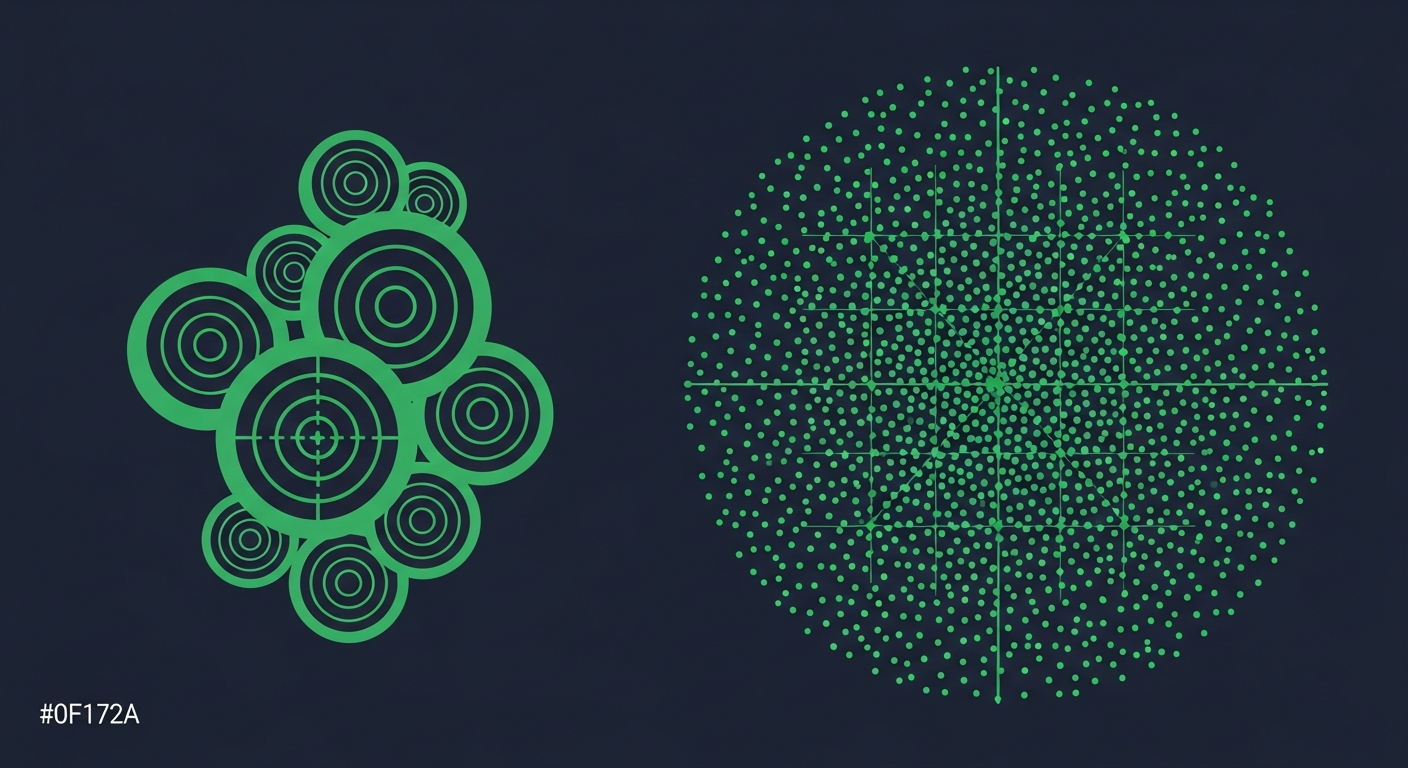
Account-based outbound wins when ACV is high, the sales cycle is long, and the TAM is concentrated. Broad prospecting wins when ACV is low, the cycle is short, and TAM is large and fragmented. Most B2B teams need a blend — a small named-account program for the strategic 100, plus a broader, signal-driven motion for the rest. Pick the mix on math, not ideology.
ABM vs. Broad Prospecting: The Short Answer
- ABM wins at high ACV, long cycles, concentrated TAM, multi-stakeholder buying.
- Broad prospecting wins at low ACV, short cycles, fragmented TAM, single-buyer deals.
- Most teams blend — named accounts get ABM treatment; the rest run signal-driven outbound.
- The wrong call burns capacity. Running ABM plays on a 10,000-account TAM is the most common mistake.
Common Misconceptions About the ABM vs. Broad Debate
Three patterns explain most failed motions:
- "ABM is the modern, broad prospecting is dated." Vendor marketing has framed it that way for a decade. The math is unchanged: ABM is expensive per touch and pays back only when ACV justifies the per-account investment. Broad prospecting is the right answer for a lot of profitable businesses.
- "Broad prospecting is just spray-and-pray." Done well, broad prospecting is signal-driven and tightly ICP-filtered — it just operates on a much larger working list. Spray-and-pray is a quality problem, not a category.
- "You have to pick one." A 1:1 program for the strategic 50 plus a signal-driven 1:many motion for the working list is the most common high-performing structure. Treat them as separate motions with separate metrics, not as a single hybrid.
What Actually Determines Which Motion Wins?
Five inputs decide it for most B2B teams:
- Average contract value (ACV). Below ~$25K ARR, per-account ABM investment rarely pays back. Above ~$100K ARR, broad prospecting wastes the deeply researched touches the buyer expects.
- Sales cycle length. Cycles over 90 days reward the deep stakeholder mapping ABM enables. Cycles under 30 days reward throughput.
- TAM concentration. A TAM of 800 accounts where the top 200 hold 80% of revenue is an ABM-shaped market. A TAM of 200,000 fragmented SMBs is not.
- Number of decision-makers. Single-buyer deals don't need 1:1 stakeholder mapping. Six-stakeholder buying committees do.
- Sales team capacity. ABM is rep-time-intensive. If your reps carry 200+ accounts each, the motion will collapse to broad prospecting in practice no matter how it's labeled.
What to Check Before You Pick a Motion
Before committing the quarter:
- Pull last year's closed-won and compute median ACV and cycle length. Don't trust averages; outliers distort them badly.
- Map your TAM and check the concentration. Top-200 share of revenue potential tells you whether ABM math will work.
- Audit rep capacity in active accounts per rep, not total accounts. Active = touched in the last 30 days.
- For ABM, define the named list explicitly with executive sponsor agreement; for broad, define the ICP filter and signal triggers.
- Set distinct success metrics: ABM tracks meaningful engagements per account; broad tracks meetings booked per 1,000 working contacts.
- Decide the budget split before selecting tooling. Tooling chosen for one motion underperforms badly on the other.
Comparison: when each motion wins
| Dimension | Account-based outbound (ABM) | Broad prospecting |
|---|---|---|
| Best ACV range | $50K+ ARR | <$25K ARR |
| Best cycle length | 90+ days | <30 days |
| TAM shape | Concentrated, < ~2,000 accounts | Large, fragmented |
| Decision-makers | 4–8 stakeholders | 1–2 stakeholders |
| Rep account load | 30–80 accounts/rep | 200–600 contacts/rep |
| Tooling weight | Account intelligence, orchestration | Signal feed, sequencer, deliverability |
| Primary KPI | Engaged accounts / quarter | Meetings booked / 1,000 contacts |
| Failure mode | Spread too thin, no real depth | Quality drift into spray-and-pray |
Frequently Asked Questions
What is the difference between account-based outbound and broad prospecting?
Account-based outbound (ABM) commits a multi-touch, multi-stakeholder program to a named list of strategic accounts. Broad prospecting works a much larger ICP-filtered list with lighter, signal-driven touches per account. The unit of investment is different — accounts versus contacts — and so are the success metrics.
When does account-based outbound win?
When ACV is meaningfully above $50K ARR, the sales cycle is over 90 days, the TAM is concentrated (a few hundred to a couple thousand accounts), and buying involves multiple stakeholders. In that shape, the per-account investment ABM requires pays back.
When does broad prospecting win?
When ACV is low, the cycle is short, the TAM is large and fragmented, and buying is mostly single-stakeholder. Throughput dominates depth in that shape, and ABM-style depth wastes rep time you can't recover.
Can a team run both motions at the same time?
Yes — and most successful B2B revenue teams do. A 1:1 ABM program for the strategic 50–200 accounts, plus a separate signal-driven 1:many motion for the rest of the ICP. Track them as separate motions with separate KPIs; do not roll up to a single conversion rate.
How do I size an ABM named-account list?
Per ABM rep, plan on 30–80 accounts depending on how deep the program goes. A "1:1" rep covers ~30; a "1:few" rep covers ~80. Going above that range almost always collapses the motion into broad prospecting in practice.
Does ABM need different tooling than broad prospecting?
Mostly the same data foundation, different workflow layer. Both need verified contacts and signal feeds. ABM additionally needs account-level intelligence, multi-stakeholder mapping, and orchestration; broad needs throughput-oriented sequencing and tight deliverability monitoring.
Is intent data more useful for ABM or broad prospecting?
It's useful for both, but for different reasons. In ABM, intent is a priority signal across a known account list. In broad, intent is a discovery signal that surfaces accounts you weren't otherwise working. The cost-effectiveness math is different.
What is the most common mistake when picking a motion?
Running ABM plays against a 10,000-account TAM. The depth-per-account investment dilutes across too many accounts and the motion looks indistinguishable from broad prospecting six months later — usually with worse throughput and the same conversion rate.
References
- HBR, The Science of Sales: https://hbr.org/topic/sales
- Forrester, B2B Marketing & Sales research: https://www.forrester.com/research/
- Gartner, Market Guide for Account-Based Marketing Platforms: https://www.gartner.com/en/marketing/research
Next Steps
If you'd like to run both motions on the same ICP-filtered, signal-driven data foundation, see how the prospect dossier works — a single dossier per account is the unit of work for ABM and the unit of qualification for broad outbound, so the same data layer powers either motion. And if you've decided the ABM motion fits your market, the companion guide to intent data for account based marketing walks through tiering target accounts and timing plays once intent data is in hand.