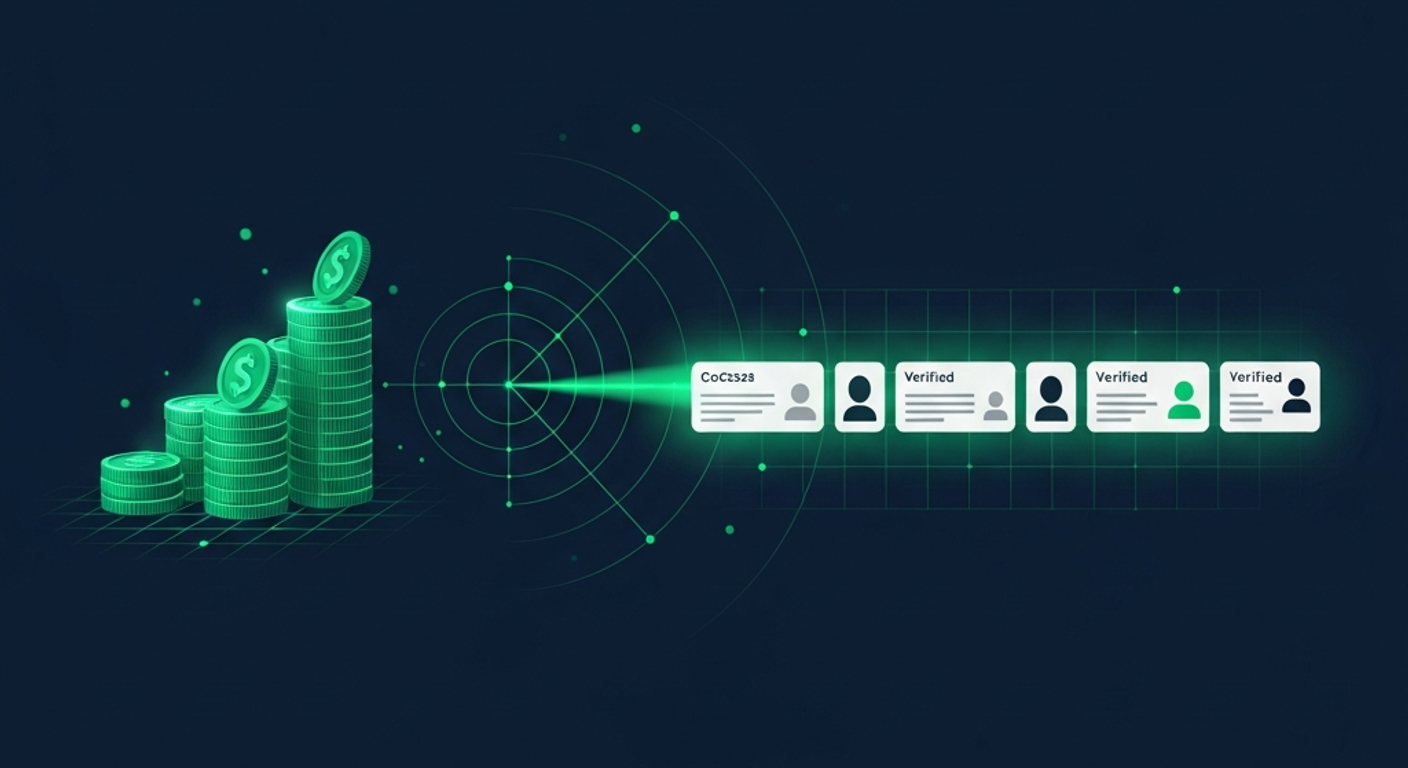
Affordable B2B intent leads aren't the cheapest list you can find — they're the leads with the lowest cost per working lead: a verified contact, attached to a real buying signal, that a rep can act on today. The fastest way to overpay is to buy a big volume feed before you've exhausted the intent that's already free. This guide shows where affordable intent leads actually come from — first-party signals, publicly observable triggers, and only then paid volume — and how to judge cost honestly with a control-group pilot.
If you're still deciding which delivery model fits your motion, pair this with our best B2B intent leads providers guide and the intent data providers buyer's guide; this page is the budget-aware lens on top of both — how to get intent-backed leads without overpaying.
Affordable B2B Intent Leads: The Short Answer
- Affordable ≠ cheap. A $0 list of stale contacts can cost more per booked meeting than a small batch of fresh, verified, signal-backed leads. Optimize cost-per-working-lead, not price-per-record.
- Start with what's free. First-party intent on your own properties and publicly observable triggers (hires, funding, job postings) deliver most of the value before you pay for anything.
- Buy volume only after proof. Paid breadth is worth it once you know which triggers convert — never as the first move.
- Always pilot with a control group. The only honest test of "affordable" is the lift a paid source shows over a matched control on your own ICP.
What "Affordable" Really Means for Intent Leads
The price tag on a lead list is the least useful number in the whole purchase. What you actually care about is how much you spend to put one workable lead in front of a rep — a contact that's real, reachable, and attached to a reason to reach out. A list that's free to download but 40% bounced, untagged, and months old has a high effective cost: wasted rep hours, burned sender reputation, and meetings that never happen.
So reframe affordability as a ratio, not a sticker price:
Cost per working lead = total spend ÷ leads that are verified, in-ICP, and tied to a fresh signal.
Under that definition, the cheapest source is almost never the raw-volume vendor. It's the intent you can generate or observe for free, corroborated and verified before a rep ever touches it. Everything below is ordered from lowest effective cost to highest.
Free First-Party Signals Come First
Your highest-quality, lowest-cost intent leads are already happening on your own properties — and most teams under-work them:
- Pricing and docs activity. Repeat visits to your pricing page, demo abandons, and deep docs reads are the strongest, cheapest buying signals you'll ever get. They cost nothing but instrumentation.
- Product and trial usage. For PLG motions, in-app behavior is intent you already own — no vendor required.
- Inbound and content engagement. Webinar attendance, high-intent search landings, and repeat newsletter clicks resolve to accounts you can route.
Wire these up and route them before you spend a cent externally. The full mechanics of turning first-party activity into a worklist are covered in B2B intent data for lead generation, and how to weight the signals once they land is in how to prioritize buying signals for outbound.
Publicly Observable Triggers Are Nearly Free
After first-party, the most affordable intent comes from public events — discrete, timestamped, and verifiable, so you're not paying for a smoothed probability you can't audit:
- New hires into buying roles — a new VP of Sales is a "why now" you can read straight off a public profile.
- Funding rounds — fresh budget and a mandate to spend, announced publicly.
- Relevant job postings — a posted role often names the exact tooling or problem a team is staffing around.
- Leadership changes and tech-stack moves — visible, dated, and hard to fake.
Because these events carry their own timestamps, freshness is a fact rather than a vendor's batch schedule — and that's what keeps the cost-per-working-lead low. For how to surface the actual in-market companies behind these signals, see B2B intent leads companies. The catch is resolution and verification: a public trigger is only an affordable lead once it's attached to a verified contact, which is exactly what a source-backed Prospect Dossier delivers.
When Paid Volume Is Actually Worth It
Paid intent feeds and contact databases aren't a trap — they're a tool with a specific job: breadth, once you've proven a motion. Buy volume when, and only when, all of these are true:
- You've exhausted free intent. First-party and public-signal leads are already routed and worked.
- You know which triggers convert. A pilot has shown you which signals produce meetings, so paid volume amplifies a known winner instead of a guess.
- The unit economics survive a control group. The paid cohort shows a material lift over a matched control on real accounts.
Buy it earlier than that and you're paying premium prices to scale noise. The delivery-model trade-offs — contact database vs. intent feed vs. managed service vs. public-signal platform — are mapped in the best B2B intent leads providers guide.
How to Evaluate Cost-Per-Working-Lead
Run every source — free or paid — through the same cost lens so you're comparing effective cost, not list price:
- Verification rate. What share of contacts are deliverable? A 90%-verified small batch beats a 60%-verified big one on cost-per-working-lead.
- In-ICP share. Off-ICP records are pure cost with no upside. Filter before you count.
- Signal freshness. A lead tied to a 6-week-old surge is background context, not intent. Discount stale leads to near-zero in your math.
- Rep time per lead. Leads that arrive with a verified contact and a "why now" need minutes of prep; raw records need hours. That labor is real spend.
- Dedupe. Paying twice for accounts already in your CRM inflates cost silently — dedupe against CRM, MAP, and ABM before counting.
Multiply it out and the "expensive" source with a verified contact and a fresh trigger is routinely the cheapest per booked meeting. You can model the math against our transparent monthly pricing before committing to any volume.
Pilot Before You Buy
Never take affordability on a vendor's word — prove it on your own accounts:
- Pick one ICP segment and a fixed window (30 days is plenty for event triggers).
- Split a control group. Hold back a matched set of accounts the source never touches.
- Measure meetings booked, not leads delivered. Volume is the metric vendors inflate; booked meetings is the one that pays rent.
- Compute cost-per-working-lead for the intent-sourced cohort and compare it to your control and your free-signal baseline.
If the paid cohort doesn't beat your free first-party and public-signal baseline by a margin worth the spend, it isn't affordable — no matter how low the per-record price looks.
Where Lead Seeker Fits
Lead Seeker is a public-signal lead platform, which makes it a natural fit for an affordability-first program. It resolves intent from observable events — hires, funding rounds, job postings, leadership changes, tech-stack moves — then attaches a verified contact, so each lead is action-ready rather than a raw score you still have to work. Every signal in a Prospect Dossier is source-backed, so a rep clicks through to the evidence instead of trusting a label. That keeps cost-per-working-lead low in three ways:
- Free starter batch. Pull verified, signal-backed leads at no cost and judge accuracy on your own ICP before paying for volume.
- Defensible freshness for free. Public events carry their own timestamps, so you're not paying a premium for "recency" you can't verify.
- Lower waste. Verified contacts plus ICP filtering mean fewer bounced, off-target records eating rep time.
We don't pretend paid breadth never has a place — it does, once a motion is proven. The point is to spend on volume last, not first. See how the output looks before you commit on our platform comparison, or browse more intent data insights for the wider playbook.
Frequently Asked Questions
What are affordable B2B intent leads?
Affordable B2B intent leads are leads with the lowest cost per working lead — a verified contact tied to a fresh buying signal that a rep can act on today — not simply the cheapest list you can buy. A free download of stale, unverified records often costs more per booked meeting than a small batch of fresh, signal-backed leads, because the wasted rep time and bounced sends are real spend. Optimize for effective cost, not price-per-record.
How can I get B2B intent leads cheaply or for free?
Start with the intent you already own: first-party signals on your pricing and docs pages cost nothing but instrumentation, and publicly observable triggers like funding rounds, new hires, and job postings are free to read and carry their own timestamps. Many providers, Lead Seeker included, also let you pull a free starter batch so you can judge contact accuracy and trigger freshness on your own ICP before paying for any volume.
Are paid B2B intent leads worth the cost?
Sometimes — but only after you've exhausted free first-party and public signals and know which triggers convert. Paid volume is worth it when it amplifies a proven motion and the paid cohort shows a material lift over a matched control group on your own accounts. Buy it before that and you're paying premium prices to scale noise, which is the most common way teams overspend on intent leads.
How do I measure cost per working lead?
Divide your total spend by the number of leads that are verified, in-ICP, and tied to a fresh signal — not by the raw record count. Factor in verification rate, in-ICP share, signal freshness, the rep time each lead needs, and dedupe against your CRM so you don't pay twice. Under this lens the source with verified contacts and fresh triggers is usually the cheapest per booked meeting, even when its per-record price looks higher.
Should I run a pilot before buying intent leads?
Yes — always. Pick one ICP segment, hold back a matched control group the source never touches, run a 30-day window, and measure meetings booked rather than leads delivered. Then compute cost-per-working-lead for the intent-sourced cohort and compare it to both your control and your free-signal baseline. If the paid source doesn't beat the free baseline by a worthwhile margin, it isn't affordable regardless of its sticker price.
How does Lead Seeker keep intent leads affordable?
Lead Seeker is a public-signal lead platform built on observable, timestamped events with a verified contact attached, so freshness and source evidence come without a premium. You can pull a free starter batch to prove accuracy on your own ICP before spending, ICP filtering cuts the off-target records that quietly inflate cost, and source-backed triggers mean reps waste less time vetting leads — all of which lowers cost-per-working-lead compared with a static list or a black-box surge score.
Sources
- Gartner — The B2B Buying Journey: https://www.gartner.com/en/sales/insights/b2b-buying-journey
- HubSpot Research — Marketing Statistics: https://www.hubspot.com/marketing-statistics
- GDPR.eu — What is GDPR, the EU's data protection law: https://gdpr.eu/what-is-gdpr/
- California Attorney General — California Consumer Privacy Act (CCPA): https://oag.ca.gov/privacy/ccpa
Next Steps
The cheapest way to find out whether a source is genuinely affordable is to look at the cost behind a single lead. See how a verified contact and a source-backed event arrive together in a Prospect Dossier, then revisit the best B2B intent leads providers guide to pick the delivery model that fits your motion. When you're ready to put a number on it, talk to sales and we'll help you design a control-group pilot that measures cost-per-working-lead on your own accounts.