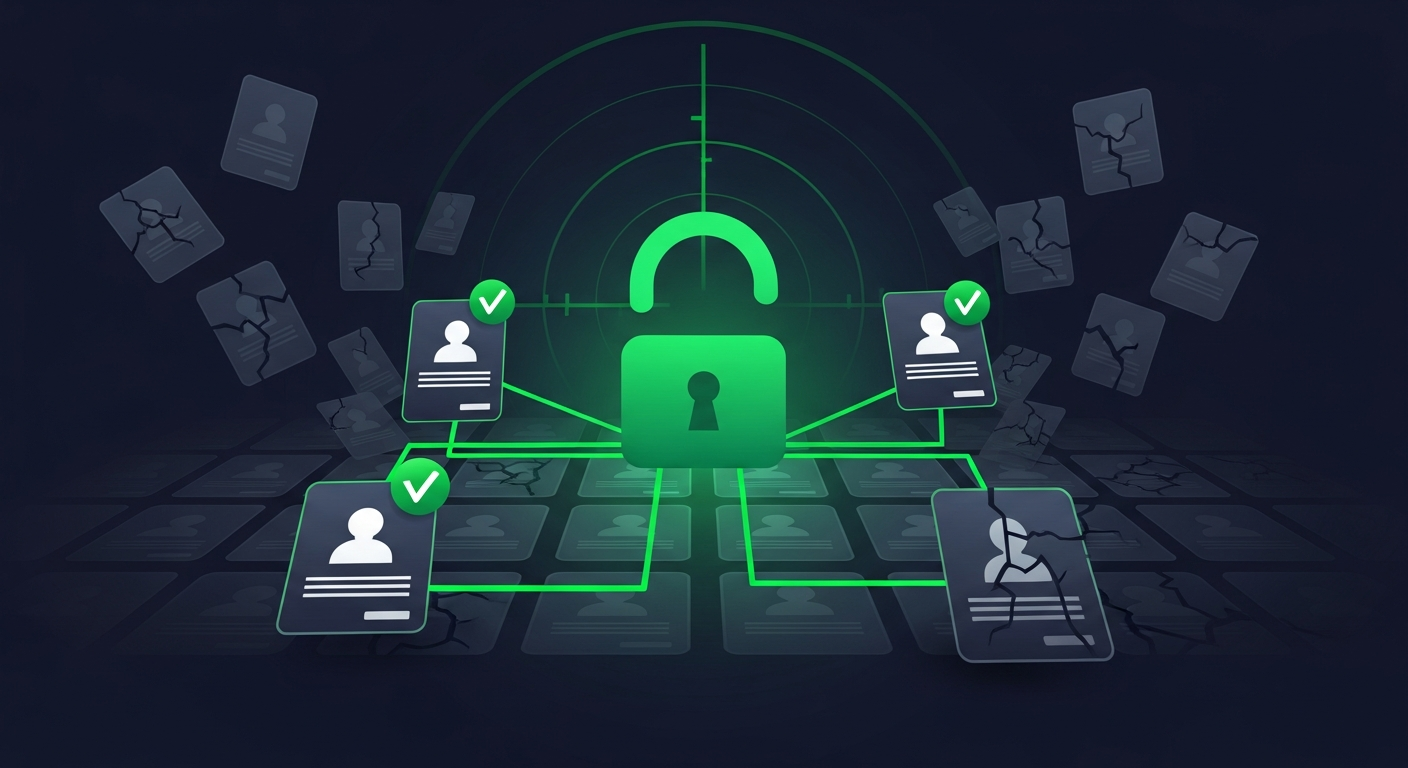
A free B2B contact database gets you started — it will not get you accuracy
A free B2B contact database — a no-cost list, a free tool tier, or a community-shared file — can seed a target list, but its records are unverified, capped, and decaying the moment you download them. Treat "free" as a sample, not a source: use it to test your ICP, confirm the category is worth the spend, then verify every record before a rep ever hits send.
Free B2B Contact Database: The Short Answer
- What you get is a starter list: a small, uncapped-looking slice of names and emails with no visible verification date and no signal behind them.
- What you don't get is freshness, coverage in your niche, direct-dial depth, or a compliance trail you can defend.
- It works best as a throwaway test of your ICP and messaging — never as the list your reps dial for a quarter.
- It fails the moment you treat "free" as "current": stale records burn sender reputation and rep trust faster than they save budget.
What a "Free" B2B Contact Database Actually Means
"Free B2B contact database" covers four very different things, and they fail in different ways:
- Free tiers of paid platforms. You get a handful of credits or monthly lookups against a real database. The data can be decent, but the cap is the point — the free tier exists to show you what you're missing, not to run outbound on.
- Downloadable free lists. A CSV of names and emails scraped or compiled once and posted for lead-gen. These are the most dangerous: static, undated, and often already circulating through hundreds of inboxes.
- Community or crowdsourced databases. Contributor-refreshed data, usually cheap or free in exchange for your own uploads. Quality is uneven and coverage is thin outside the most common ICPs.
- Free tools that build lists. Chrome extensions and finders that pull an email per lookup. Useful for one-off research, but they verify at scrape time — not at send time — so the record can be wrong by the time you use it.
None of these is worthless. The mistake is treating any of them as a source of record rather than a sample. For the paid side of this decision — how to weigh vendors once you're ready to spend — see how to choose the best B2B contact database.
Where Free Contact Databases Fall Short
The gap between free and workable is not the record count. It's four things a free list almost never gives you.
Freshness
Business contact data decays continuously as people change jobs, get promoted, and switch companies. The U.S. Bureau of Labor Statistics put median employee tenure at just 3.9 years in January 2024 — so a meaningful share of any static file goes wrong every year. A free list has no "last verified" date because there is nothing to verify against; it was true once, and no one is keeping it true.
Coverage in your niche
Free datasets skew toward the accounts everyone already has: big logos, common titles, English-speaking markets. Test coverage against your named accounts and you'll usually find the long tail — the mid-market and regional buyers you actually need — is empty.
Verification and deliverability
An email that was valid when the file was assembled tells you nothing about the day your rep sends. Blasting an unverified free list at your primary domain is the fastest way to tank deliverability: bounces and spam traps train mailbox providers to route you to junk. Verified-at-use beats verified-at-download every time.
Compliance and provenance
A free list rarely comes with a lawful basis, a source per field, or a way for individuals to request removal. That's a brand and legal risk under GDPR / UK GDPR and US-state privacy laws, not a bargain — and the buyer, not the list's author, carries it. For the full picture on sourcing and consent, see B2B data provider compliance for GDPR and CCPA.
How to Evaluate a Free B2B Contact Database
If you're going to use a free option, grade it like a paid one — just faster, on a small sample:
- Pull 25 records from your real ICP and verify the emails and titles by hand. Record the accuracy rate. Below ~85% and the list is a liability, not a shortcut.
- Check for a verification date. No visible "last verified" timestamp means no claim you can trust. Assume every undated record is stale.
- Test coverage on your named accounts, not the vendor's global total. "Millions of contacts" is meaningless if 5 of them match your segment.
- Read the sourcing and removal policy. If you can't find a lawful basis or an opt-out path, don't send to the list.
- Measure real cost, not sticker price. "Free" that produces bounces, spam complaints, and cleanup work has a real cost per workable contact — often higher than a small verified batch.
That last point is why the honest comparison is never free-vs-paid — it's cost per contact your reps can actually work. A guide to running that test end to end lives in the B2B lead generation software walkthrough.
How to Get Verified Contacts Without Paying Up Front
"Free" and "verified" aren't mutually exclusive — you just have to get free the right way:
- Use free trials and free verified batches, not static lists. A free batch pulled and verified at the moment you request it is fresh by construction; a downloaded CSV is stale by construction.
- Verify before you send, always. Run any list — free or paid — through validation, and prioritize contacts confirmed within the last 30 days for active outbound.
- Start from a signal, not a name dump. A record attached to a why now — a new hire, a posted role, a funding event — converts far better than a cold name pulled from a free file. The difference between a raw list and a signal-backed brief is covered in prospect intelligence tools.
- Keep the free sample small and disposable. Use it to validate your ICP and message, then move your real motion onto verified, dated records.
Where Lead Seeker Fits
Lead Seeker's Prospect Dossier is built around verified-at-search-time contact data: the email, role, and most recent buying signal are pulled and confirmed the moment you spend a Lead Unit, with the verification date stamped on every field — the opposite of a free CSV that decays from the day you download it. You can start without paying up front: claim 5 free verified leads and audit the emails, titles, and signals by hand before any budget changes hands. For teams that want to begin from market signals rather than a name list, Lead Compass turns those signals into search-ready prompts so reps only build dossiers for accounts worth working, and the transparent pricing lets you model cost per workable contact before you commit.
Frequently Asked Questions
Is there a truly free B2B contact database?
Sort of, but with strings. Free options come as free tiers of paid platforms (capped credits), downloadable free lists (static and undated), community or crowdsourced databases (uneven quality), and free list-building tools (verified at scrape time, not send time). Each can seed a test list, but none is a reliable source of record — treat "free" as a sample you must verify, not a database you can run outbound on.
Are free B2B contact databases accurate?
Rarely accurate enough for outbound. A free list has no "last verified" date and decays continuously — the U.S. Bureau of Labor Statistics reported median employee tenure of 3.9 years in January 2024, so a sizable share of any static file is wrong within months. Always pull a 25-record sample from your own ICP, verify the emails and titles by hand, and expect accuracy well below a fresh, verified source.
What are the limits of free B2B contact database tiers?
Free tiers exist to show you what the paid product does, so the limits are the product: hard caps on lookups or credits, no bulk export, thin direct-dial coverage, no buying signals, and no verification timestamp on records. Coverage also skews to common accounts and titles, so the mid-market and regional buyers you actually need are usually missing.
Is it legal to use a free B2B contact database?
It can be, but the burden is on you, not the list's author. Confirm the data has a lawful basis, that individuals can request removal, and that data-subject requests are honoured for GDPR / UK GDPR and applicable US-state laws. A free list with no sourcing trail or opt-out path is a brand and legal risk — get person-level EU/UK data reviewed before outreach.
How do I get verified B2B contacts without paying up front?
Use free trials and free verified batches rather than static free lists. A batch pulled and verified at the moment you request it is fresh by construction, while a downloaded CSV is stale by construction. Verify every record before sending, prioritize contacts confirmed within the last 30 days, and start from a buying signal rather than a raw name dump so the free sample actually converts.
Free vs paid B2B contact database: which should I choose?
Neither by default — choose on cost per workable contact, the total cost divided by the contacts your reps can actually work. A free list that produces bounces, spam complaints, and cleanup often costs more per usable record than a small verified batch. Use free to test your ICP and messaging, then move your real outbound onto verified, dated records from a source you can audit.
Sources
- US Bureau of Labor Statistics, Employee Tenure Summary (median tenure 3.9 years, Jan 2024): https://www.bls.gov/news.release/tenure.nr0.htm
- US Federal Trade Commission, CAN-SPAM Act compliance guide: https://www.ftc.gov/business-guidance/resources/can-spam-act-compliance-guide-business
- ICO (UK), Direct marketing guidance: https://ico.org.uk/for-organisations/direct-marketing-and-privacy-and-electronic-communications/
- European Commission, General Data Protection Regulation: https://commission.europa.eu/law/law-topic/data-protection_en
Next Steps
If you'd rather start from records you can actually reach than a free list that decays, claim 5 free verified leads and run the 25-record verification test by hand, then compare the transparent monthly pricing against your current cost per qualified meeting before you commit.