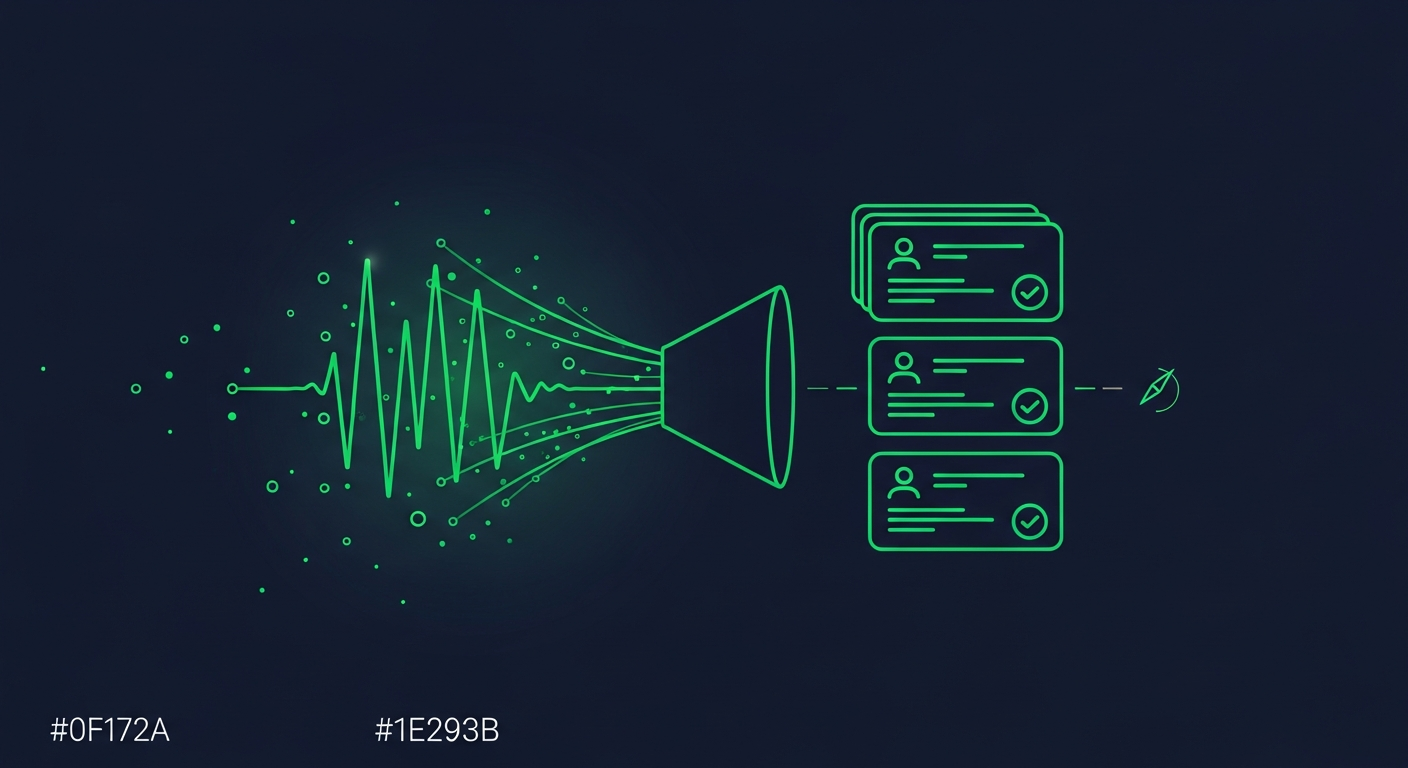
Most teams buy B2B intent data and then quietly fail to generate leads from it. The feed lights up with "surging" accounts, a rep exports a list, and nothing converts — because a topic surge is not a lead. B2B intent data for lead generation works only when you treat the signal as the first step of a pipeline, not the finish line: source the right intent, narrow it to accounts that match your ICP, attach a verified human to reach, and run a tight play while the signal is still warm. This guide walks that full path — from raw signal to booked meeting — and the measurement that proves it's working.
If you're still fuzzy on what intent data is versus what it can do, start with our primer on B2B intent data explained and come back. Everything below assumes you already know a surge is a probability, not a purchase order.
Why Intent Data Stalls Before It Becomes a Lead
The gap between "we have intent data" and "we generated leads from it" is where most budget evaporates. Four breakdowns are almost always to blame:
- No contact attached. Account-level intent tells you a company is researching. A lead needs a person — name, title, verified email or phone. Without that resolution step, the surge is trivia.
- No ICP filter. Raw feeds surface every account touching a topic, including the ones you'd never sell to. Working an off-ICP surge burns rep hours and trains the team to ignore the signal entirely.
- Acted on too late. Intent decays in days. A list pulled at the end of the month describes research that already cooled, so the outreach lands as generic spam instead of a timely, relevant nudge.
- Wrong message for the stage. A first-touch "saw you're researching X" email to an account that's mid-evaluation reads as out of touch. Intent without journey context produces mistimed outreach.
Fix those four and intent data stops being a dashboard metric and starts being a source of pipeline.
Sourcing the Right Intent for Lead Generation
Not every intent type generates leads at the same rate. Rank your sources by how directly they translate into a contactable, in-market person:
- First-party intent. Surges on your own properties — pricing page visits, demo-request abandons, repeat docs reads, a stalled trial. You already have partial identity and explicit interest, so conversion is the highest of any source. This is the cheapest lead generation you own and most teams under-work it.
- Public-event signals. Discrete, verifiable events — new hires into a buying role, funding rounds, relevant job postings, tech-stack changes. They're timestamped, hard to fake, and map cleanly to a "why now" reason for outreach.
- Second-party intent. Another company's first-party data shared with you (a review-site's in-market buyers, a publisher's content engagement). Narrow but high quality when the topic fits your buyer.
- Third-party topic intent. Aggregated topic-research surges from publisher consortiums, bidstream, and panels. Highest volume, noisiest, and the least useful as a standalone lead source — best reserved for top-of-funnel breadth once the three above are working.
For a deeper comparison of how vendors collect and price these, see how to choose intent data providers. The practical rule for lead generation: start at the top of this list, where intent is closest to a real person, and only add breadth downward once the high-conversion sources are fully worked.
From Signal to Shortlist: Prioritizing Accounts
A feed of surging accounts is not a worklist. To turn it into one, score each account on three axes and only promote the intersection:
- Fit. Does the account match your ICP — size, industry, region, tech stack? An off-ICP surge is noise no matter how strong.
- Intent strength and recency. How far above baseline is the surge, and how fresh? A modest but two-day-old signal usually beats a huge one from three weeks ago.
- Reachability. Can you actually get a verified contact in the buying unit? An account you can't reach is not a lead source.
Accounts that clear all three are your daily worklist. The middle tier (fit + intent, weak reachability) goes to enrichment. Everything else waits. The accounts that clear the bar most decisively — strong fit plus a fresh, accelerating surge — are your high-intent lead generation targets, and they deserve a same-day touch. This is the same discipline we cover in how to prioritize buying signals for outbound — applied specifically to converting intent into leads rather than ranking signals in the abstract.
Timing the message to the journey matters as much as the score. Intent is most actionable in early research and the move into active evaluation; a surge there deserves a fast, helpful first touch, while a late-stage account needs a different, proof-heavy approach.
Pairing Intent With Verified Contacts
This is the step that actually creates a lead. Account-level intent plus a verified, role-correct contact is the durable pattern — person-level third-party intent is fragile and often non-compliant, so resolve the person yourself rather than buying resolved individuals.
For each prioritized account:
- Map the buying unit. Identify the economic buyer, the champion, and the likely blocker for your category — not just whoever has the most senior title.
- Verify before you send. A bounced email on a "hot" account wastes the signal entirely. Confirm the address and phone are live before the rep touches the record.
- Carry the "why now" into the record. The signal that surfaced the account (a funding round, a new VP, a docs binge) is the opening line of the outreach. Strip it out and you're back to cold spam.
A source-backed Prospect Dossier is built for exactly this hand-off: the triggering signal, the verified contacts, and the supporting context arrive together, so the rep opens the record with a reason to reach out already in hand. See the full set of buying signals the platform tracks to understand what feeds those dossiers.
An Actionable Lead-Generation Workflow
Here's the loop that turns an intent feed into booked meetings. Run it weekly at minimum, daily if your volume supports it:
- Ingest signals from your highest-conversion sources first (first-party, then public events), then layer third-party breadth.
- Filter to ICP so only accounts you'd genuinely sell to survive.
- Score and rank on fit, intent strength/recency, and reachability; cut the worklist to what a rep can actually work today.
- Resolve contacts — map the buying unit and verify emails and phones before any send.
- Personalize on the trigger. Lead with the specific "why now," not a generic value prop.
- Sequence fast. Reach out within hours, not weeks, while the signal is warm; multi-touch across email, phone, and social.
- Route and log. Push qualified, verified leads into the CRM cleanly with the source signal attached for attribution.
- Feed results back so the accounts that book meetings sharpen tomorrow's scoring.
The whole loop is wasted if step seven is sloppy — see exporting prospects into your CRM cleanly for the hygiene that keeps attribution intact. If you'd rather not build the ingestion and resolution layers yourself, the prospect intelligence platform does steps one through four for you and hands the rep a ready-to-work record.
Common Pitfalls That Kill Conversion
Even teams with good data trip on the same wires:
- Treating intent as a list, not a trigger. Bulk-blasting every surging account ignores fit and timing and torches your domain reputation. Intent prioritizes; it doesn't replace targeting.
- Skipping the control group. Without a matched control, you can't tell whether intent lifted conversion or you'd have booked those meetings anyway.
- Over-resolving people. Buying person-level intent at scale invites compliance risk and fragile data. Resolve contacts at prioritized accounts instead.
- Stale SLAs. A weekly batch with a multi-day lag means you act on intent that's already cold. Insist on observation-to-delivery in hours, ideally under 72.
- No "why now" in the message. The single highest-leverage edit to intent-driven outreach is opening with the trigger event instead of a template.
Measuring Whether Intent Is Actually Generating Leads
If you can't prove lift, you can't defend the spend. Measure intent's contribution to lead generation with a small, honest scorecard:
- Conversion lift vs. control. Run intent-prioritized accounts against a matched control list and compare meetings booked over 90 days. Lift is the headline metric; everything else is diagnostic.
- Speed to first touch. Median hours from signal observed to first outreach. Slow speed quietly caps every other number.
- Contact verification rate. Share of prioritized accounts where you resolved a verified, role-correct contact. Low rates mean your "leads" aren't reachable.
- Signal-to-meeting rate. Of accounts that surged and were worked, how many converted to a booked meeting — the cleanest read on whether the source earns its cost.
If the intent-treated cohort doesn't beat the control over a full quarter, change the source or the workflow before you renew. To model the economics before committing, review the transparent monthly pricing, or claim a free batch of verified leads and run the workflow above on your own ICP this week.
Frequently Asked Questions
How do you use B2B intent data for lead generation?
Treat intent as the first step of a pipeline, not a finished lead. Source the highest-conversion intent first (your own first-party signals and discrete public events), filter to accounts that match your ICP, score them on fit, recency, and reachability, then resolve a verified contact in the buying unit and reach out fast with the triggering "why now" as your opening line.
Does intent data alone generate leads?
No. Account-level intent tells you a company is researching a topic; it doesn't give you a person to contact or confirm they fit your ICP. Intent generates leads only when it's paired with ICP filtering and a verified, role-correct contact — without that resolution step, a surge is just a dashboard metric.
What's the best intent data for lead generation?
The intent closest to a contactable, in-market person converts best. First-party signals on your own properties rank highest, followed by discrete public events (hires, funding, job postings), then second-party shared data, with broad third-party topic surges last — useful for top-of-funnel breadth but the noisiest as a standalone lead source.
How fast do you have to act on intent signals?
Quickly. Intent decays materially within 7–14 days, and a surge older than three weeks is effectively background context. Aim for an observation-to-delivery SLA under 72 hours and a first outreach measured in hours, so you reach the account while it's still actively researching rather than after it has moved on.
How do you pair intent data with verified contacts?
For each prioritized account, map the buying unit (economic buyer, champion, likely blocker), verify each person's email and phone before sending, and carry the triggering signal into the record so the rep opens with a concrete reason to reach out. Resolve contacts yourself rather than buying person-level third-party intent, which is fragile and carries compliance risk.
How do you measure intent-driven lead generation?
Compare intent-prioritized accounts against a matched control list and track meetings booked over 90 days for the headline lift number. Support it with speed to first touch, contact verification rate, and signal-to-meeting rate. If the intent-treated cohort doesn't beat the control over a quarter, change the source or the workflow before you renew.
References
- ICO (UK), Direct marketing guidance: https://ico.org.uk/for-organisations/direct-marketing-and-privacy-and-electronic-communications/
- European Commission, General Data Protection Regulation: https://commission.europa.eu/law/law-topic/data-protection_en
- IAB Tech Lab, OpenRTB and bidstream context (technical reference): https://iabtechlab.com/standards/openrtb/
- Gartner, B2B Buying Journey (industry overview): https://www.gartner.com/en/sales/insights/b2b-buying-journey
Next Steps
The fastest way to see whether intent data can generate leads for your team is to run the workflow above on a single ICP segment for a week. Pull the surging accounts, filter to fit, resolve verified contacts, and reach out on the trigger — then check the signal-to-meeting rate against a control. Once those leads start booking, the next step is turning the same signals into forecastable revenue — see intent data for pipeline generation. If you'd rather skip the build, see how source-backed signals and verified contacts arrive together in a Prospect Dossier, or browse more intent data insights for the wider playbook.