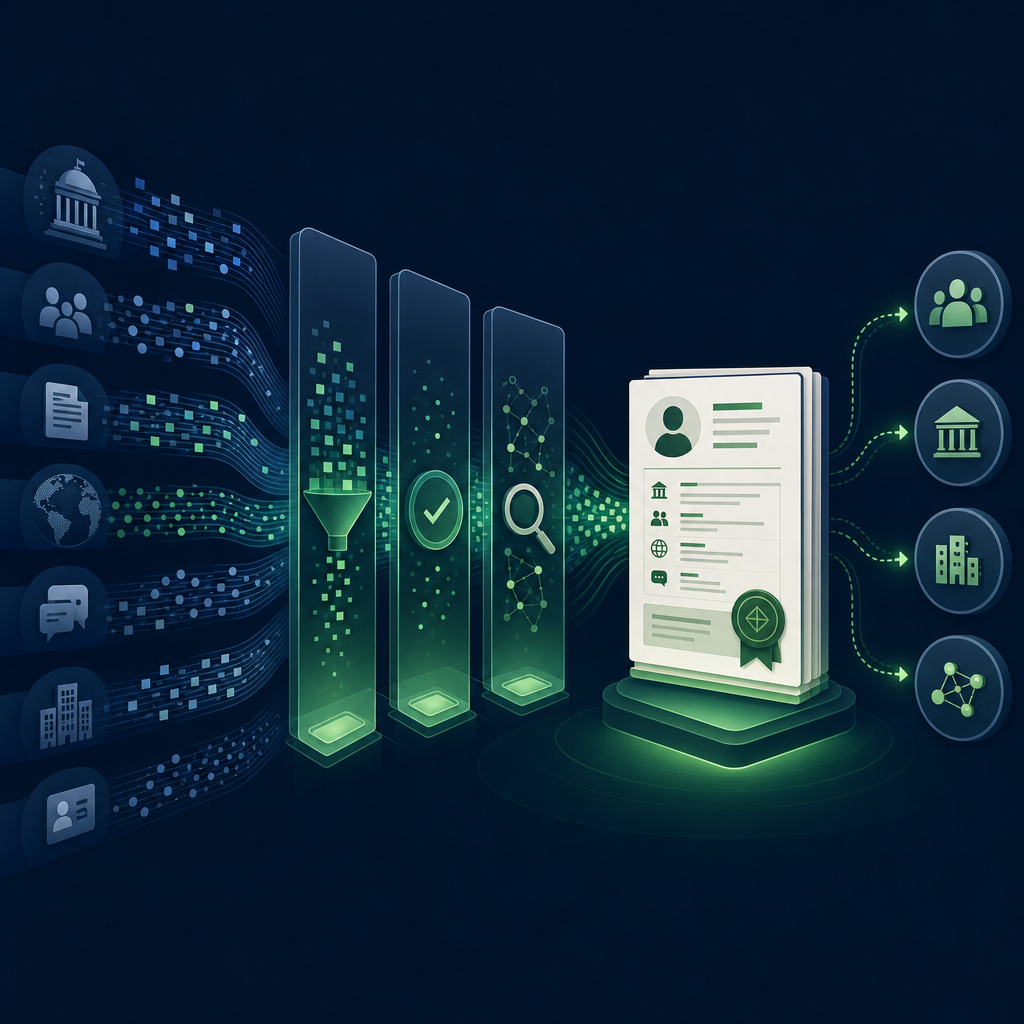
The best Clay alternative for prospect research depends on which part of Clay you need to replace: Apollo for a combined database and sequencing workflow, Cognism for compliant contact data and phone-focused prospecting, Common Room for signal-rich customer intelligence, Unify for intent-led outbound orchestration, Persana AI for enrichment and workflow automation, and Lead Seeker for source-backed, human-inspectable prospect dossiers. Clay remains a strong choice for flexible multi-provider workflows; an alternative is better only when it solves your operating constraint more directly.
Shortlist
| Tool | Best fit | Strongest job | Limitation to test |
|---|---|---|---|
| Clay | Teams building flexible enrichment and GTM workflows | Multi-provider tables, enrichment, and automation | Credit design, maintenance, and operator complexity |
| Apollo | Teams wanting database, contacts, and sequencing together | Broad prospecting workflow in one product | Verify contact accuracy and deliverability on your segment |
| Cognism | Phone-led and regulated-market teams | Contact data, mobile numbers, and compliance positioning | Coverage and cost by country and persona |
| Common Room | Teams using community, product, and digital signals | Person/account signal aggregation | Not a simple drop-in contact database |
| Unify | Teams building intent-led outbound plays | Signal capture and automated activation | Requires clear ICP, messaging, and governance |
| Persana AI | Teams prioritizing enrichment and workflow flexibility | AI-assisted research and data orchestration | Verify source transparency and output consistency |
| Lead Seeker | Teams wanting inspectable research rather than a static row | Source, observed date, context, confidence, and next action | Newer platform; validate coverage on your market |
The Clay Alternatives Prospect Research Source Map
Do not compare tools by the number of integrations alone. Map every required field to a source and decision:
| Research field | What to capture | Quality test |
|---|---|---|
| Person | Current name, role, and professional source | Role confirmed recently |
| Company | Firmographics and operating context | Matches current ICP |
| Signal | Public business change or observed behavior | Dated and attributable |
| Contact route | Business email, phone, social, or referral path | Appropriate, verified, and usable |
| Confidence | What is confirmed versus inferred | Visible to the seller |
| Action | Why this person, why now, what next | Specific enough to guide outreach |
A workflow that returns 5,000 populated rows but hides source recency may be less useful than one that returns 100 records a seller can inspect.
When Clay Is Still the Better Choice
Keep Clay when your team has:
- A dedicated operator who understands data providers and table design
- Reusable enrichment recipes
- Clear credit controls
- Strong QA for source conflicts and missing values
- A downstream system for messaging, suppression, and CRM governance
Clay’s flexibility is the point. Replacing it with a simpler tool can reduce capability if the real problem is weak workflow ownership rather than software fit.
When an Alternative Is Better
Choose Apollo for consolidation
Apollo can reduce the number of separate tools when the team wants prospect discovery, contact data, lists, and engagement in one environment. Test a representative segment for role accuracy, email status, duplicate handling, and CRM sync before migrating.
Choose Cognism for contact-data priorities
Cognism is a serious candidate when phone access, regional compliance, and contact-data coverage matter more than building highly customized research tables. Request a sample that matches your geography and seniority.
Choose Common Room for signal context
Common Room fits teams that already receive meaningful digital, product, community, partner, or social signals and need to connect people to accounts. It is best evaluated as customer intelligence and signal orchestration, not simply a database substitute. If you are weighing a move away from it, the Common Room alternatives for sales intelligence guide separates its signal, identity, contact-data and activation layers and maps which vendors replace each. Teams that fed Clay from Trigify's HTTP-node integration should also read the job-by-job map of Trigify replacements, which covers what Clay's own signals and the other replacements cover after Trigify closes on 22 October 2026.
Choose Unify for automated plays
Unify is designed around signals and outbound plays. It can fit teams ready to operationalize specific triggers, but automation magnifies weak targeting. Define which signal changes priority and what a human must review.
Choose Persana AI for enrichment workflows
Persana AI competes closer to the enrichment and research-automation layer. Test whether output fields include enough source transparency for sellers to trust and correct the result.
Choose Lead Seeker for evidence-backed dossiers
Lead Seeker starts with a current business question, finds the relevant person and company, records public or professional evidence, and adds context, confidence, and a next action. It is not positioned as an unlimited spreadsheet automation environment.
A 50-Record Evaluation
Run the same 50 target accounts through two finalists. Measure:
- Current company accuracy
- Current role accuracy
- Valid business contact coverage
- Source URLs and observed dates
- Relevant signal coverage
- Duplicate and conflict rate
- Time to review and correct
- Records accepted by sales
- Meetings or qualified progression
- Total cost per accepted record
Keep rejected records in the denominator. Removing failures makes every platform appear better than it is.
Cost Model
Compare:
Platform fee + data/enrichment credits + operator time + integration maintenance + error correction + downstream sending costs
Then divide by accepted records and qualified outcomes. A lower subscription can cost more when operators spend hours repairing inconsistent tables.
Mistakes to Avoid
- Rebuilding every Clay workflow before proving it is still needed
- Comparing advertised record counts instead of segment accuracy
- Treating enrichment success as verification
- Hiding conflicting sources from sellers
- Automating outreach from low-confidence records
- Ignoring suppression and privacy controls
- Choosing a tool before defining the sales decision
Editorial Buyer Q&A
Is there a direct one-for-one Clay replacement? Usually not. Clay spans orchestration, enrichment, research, and workflow design. Most alternatives are stronger in one layer and narrower in others.
Should an alternative include sequencing? Only if consolidation is a priority. Teams with established engagement systems may prefer a research layer that hands off cleanly rather than duplicating sequencing.
What proves prospect research quality? Current role accuracy, visible sources, observed dates, resolved conflicts, useful context, and sales acceptance—not the number of completed cells.
Frequently Asked Questions
How were the best Clay alternatives for prospect research evaluated?
They were evaluated on discovery, contact verification, signal context, research depth, source transparency, workflow control, activation, cost visibility, and buyer fit.
Which Clay alternative is best for a different use case or budget?
Choose by the layer you need: Apollo for consolidation, Cognism for contact data, Common Room for signal context, Unify for automated plays, Persana for enrichment workflows, or Lead Seeker for source-backed dossiers.
What proof should a buyer verify before choosing a Clay alternative?
Run the same target accounts through finalists and inspect current role accuracy, contact validity, sources, signal relevance, duplicates, operator time, and sales acceptance.
How current are the pricing and capabilities in this list?
Product evidence was reviewed September 9, 2026. Pricing, credit rules, integrations, and coverage change, so verify a current proposal and product documentation.
What relationship does the publisher have with anyone included?
Lead Seeker publishes this article and is one evaluated option. It is not ranked universally first, and its newer market history is listed as a limitation.
Is Clay better than Apollo for prospect research?
Clay is generally more flexible for multi-provider research workflows. Apollo is often simpler when a team wants database, contact discovery, and engagement in one product.
Next Steps
Define the research record before buying the platform. If your team needs current identity, role, company evidence, context, confidence, and next action in one inspectable output, review how the prospect dossier works.
Sources
- Clay, official website
- Apollo, official platform
- Cognism, official website
- Common Room, official website
- Unify, official website
- Persana AI, official website